iamrahulajit.com

How to Improve Website Traffic
Digital Marketing

How to Improve Website Traffic

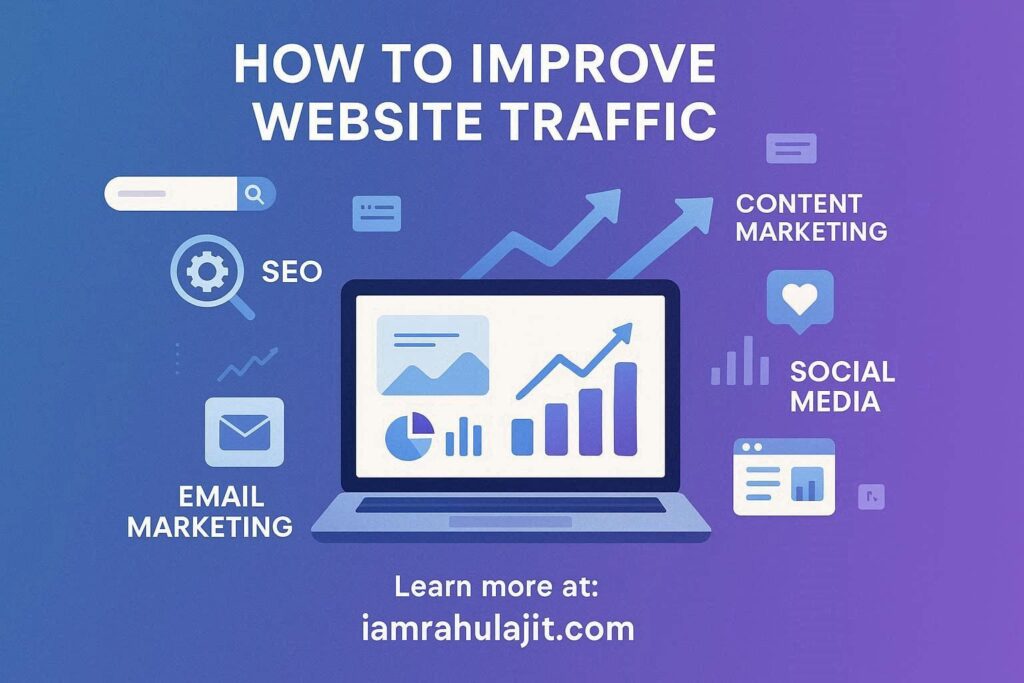
Every website owner wants more visitors. Whether you run a business website, blog, or online portfolio, increased traffic often means more visibility, leads, and potential customers. However, many website owners struggle to attract consistent visitors or rank higher on Google because they rely on outdated strategies or ignore search engine optimisation. Understanding how to improve website traffic requires a combination of SEO, content strategy, and user-focused optimisation. Search engines prioritise websites that provide valuable content, strong user experience, and well-structured pages. By applying the right strategies, businesses and individuals can gradually increase their website visibility and attract targeted visitors. If you want sustainable growth, learning how to improve website traffic should be a priority for your digital marketing efforts. Focus on Search Engine Optimization One of the most effective ways to learn how to improve website traffic is through search engine optimization. SEO helps websites rank higher in search engine results, allowing users to discover your content organically. When your pages appear on the first page of search results, they are more likely to receive consistent clicks and visitors. Important SEO practices include: Search engines reward websites that follow best practices and provide valuable information. Over time, consistent SEO improvements can significantly increase organic traffic. Create High Quality Content Content plays a critical role in determining how to improve website traffic. Websites that consistently publish useful, informative, and engaging content tend to attract more visitors. High-quality content should: When users find your content helpful, they are more likely to spend time on your website and explore additional pages. Search engines also prioritize websites that publish valuable and original content regularly. By focusing on quality rather than quantity, you can build credibility and long-term traffic growth. Optimize for User Experience Another important factor in understanding how to improve website traffic is user experience. If visitors arrive on your website but leave quickly due to poor design or slow loading speeds, search engines may interpret this as a negative signal. Improving user experience includes: Websites that offer a smooth browsing experience encourage visitors to stay longer and explore more pages. This improves engagement metrics and increases the likelihood of repeat visits. Use Internal Linking Internal linking is often overlooked but plays a key role in how to improve website traffic. Internal links connect different pages within your website. They help search engines understand your website structure and allow users to discover additional content easily. For example, if a blog post discusses SEO strategies, it can link to other related articles on your website. Benefits of internal linking include: A strong internal linking strategy can significantly improve both user engagement and SEO performance. Promote Content Through Multiple Channels Publishing content alone is not enough. Promoting your content is another important step in learning how to improve website traffic. Content promotion can include: Promotion increases the chances of your content being discovered by new audiences. When combined with strong SEO practices, content promotion can accelerate website traffic growth. Monitor Performance and Improve Understanding how to improve website traffic also requires analyzing performance and making continuous improvements. Monitoring website data can help you identify which strategies are working and which areas need optimization. Important metrics to track include: By regularly reviewing performance data, website owners can adjust their strategies and focus on tactics that deliver the best results. Continuous optimisation is one of the key principles behind successful digital marketing. How to Improve Website Traffic: Conclusion Learning how to improve website traffic is not about quick shortcuts or temporary tricks. Instead, it requires a consistent strategy focused on providing value to users while following search engine best practices. Websites that invest in SEO, publish helpful content, and optimize user experience are more likely to achieve long-term traffic growth. While results may not appear overnight, steady improvements can lead to significant visibility over time. From my experience working in digital marketing, sustainable website traffic growth comes from understanding both search engine algorithms and user behavior. Businesses that prioritize quality content and technical optimization usually outperform competitors who rely on outdated tactics. If you are interested in learning more about SEO strategies, website optimisation, and digital marketing insights, you can explore additional resources on iamrahulajit.com, where I share practical marketing knowledge and strategies that help websites grow their online presence. By applying these strategies and consistently improving your website, you can successfully understand how to improve website traffic and build a strong digital presence that attracts visitors over the long term.
SEO Mistakes to Avoid
Digital Marketing

SEO Mistakes to Avoid: Common Errors That Hurt Your Rankings

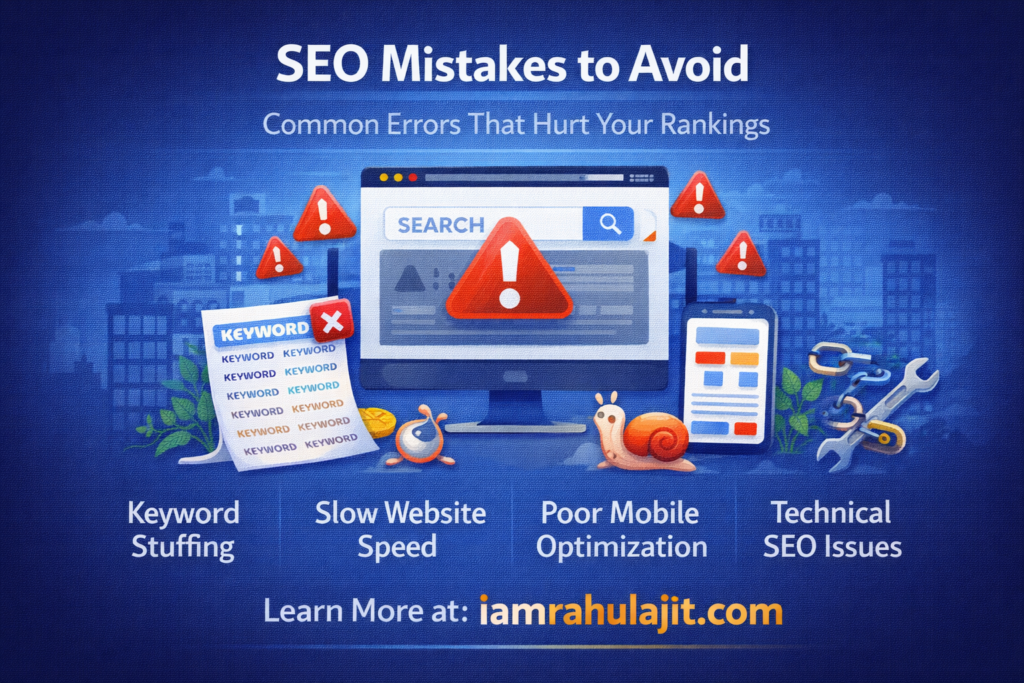
Search engine optimization can significantly improve a website’s visibility and help businesses attract organic traffic on Google. However, many websites struggle to rank well because they unknowingly make critical optimisation errors. Understanding SEO Mistakes to Avoid is essential for anyone trying to build long-term search engine visibility. SEO is not just about adding keywords or publishing content. It requires a balanced strategy that includes technical optimization, quality content, and a positive user experience. When these elements are ignored, websites may fail to rank even if they publish valuable content. By identifying and correcting common errors, businesses can improve their chances of ranking higher in search results. These SEO Mistakes to Avoid will help beginners and website owners prevent common optimisation problems. Keyword Stuffing One of the most common SEO Mistakes to Avoid is keyword stuffing. In the early days of search engines, websites could rank simply by repeating keywords multiple times within a page. Today, search engines are far more advanced and can easily detect unnatural keyword usage. Keyword stuffing not only harms readability but may also trigger search engine penalties. Instead of repeating keywords excessively, content should include keywords naturally while focusing on providing useful information. A well written article that answers user questions will always perform better than content that forces keywords unnaturally. Maintaining a balanced keyword density helps ensure content remains both user-friendly and search engine optimised. Ignoring Search Intent Another major issue many websites face is ignoring search intent. Search intent refers to the reason behind a user’s search query. When content does not match what users are looking for, search engines are less likely to rank it highly. One of the important SEO Mistakes to Avoid is creating content that targets keywords without understanding the user’s needs. For example, if someone searches for “SEO mistakes to avoid,” they expect practical explanations and solutions rather than vague definitions. Content that directly answers user questions and provides actionable insights is more likely to rank well. Poor Content Quality Publishing low-quality content is another serious issue. Search engines prioritise valuable, well-structured, and informative content. One of the most critical SEO Mistakes to Avoid is publishing thin content that provides little value to readers. Common content issues include: High-quality content should be detailed, easy to read, and clearly organized. Websites that consistently publish useful content tend to build stronger authority over time. Slow Website Speed Website speed plays a major role in both user experience and search rankings. One of the technical SEO Mistakes to Avoid is ignoring page speed optimisation. When websites load slowly, users are more likely to leave before the page fully loads. This increases bounce rates and reduces engagement, which can negatively impact rankings. Improving website speed can involve: A faster website not only improves SEO performance but also provides a better experience for visitors. Lack of Mobile Optimisation With the majority of internet users browsing on smartphones, mobile optimization is now essential. Another important SEO Mistakes to Avoid is having a website that does not function well on mobile devices. Mobile-friendly websites should: Search engines prioritise websites that deliver a strong mobile experience, making mobile optimization a critical ranking factor. Poor Internal Linking Internal links help search engines understand how different pages on a website connect with each other. One of the overlooked SEO Mistakes to Avoid is failing to build a proper internal linking structure. Without internal links, search engines may struggle to discover important pages on your website. Internal linking provides several benefits: A well-planned internal linking strategy can significantly strengthen SEO performance. Ignoring Technical SEO Technical SEO refers to the behind-the-scenes elements that help search engines crawl and index your website. Ignoring technical issues is another key SEO Mistakes to Avoid. Some common technical problems include: Regular SEO audits can help identify and fix these issues before they negatively affect rankings. SEO Mistakes to Avoid: Conclusion Understanding SEO Mistakes to Avoid is just as important as learning SEO strategies themselves. Many websites fail to achieve strong rankings not because they lack content, but because they overlook basic optimisation principles. By avoiding common issues such as keyword stuffing, poor content quality, slow website speed, and weak internal linking, businesses can significantly improve their chances of ranking higher in search results. From my experience working in digital marketing and creating my website iamrahulajit.com, SEO success often comes from consistent improvement rather than quick fixes. Websites that regularly update content, optimise performance, and focus on user experience tend to outperform competitors over time.

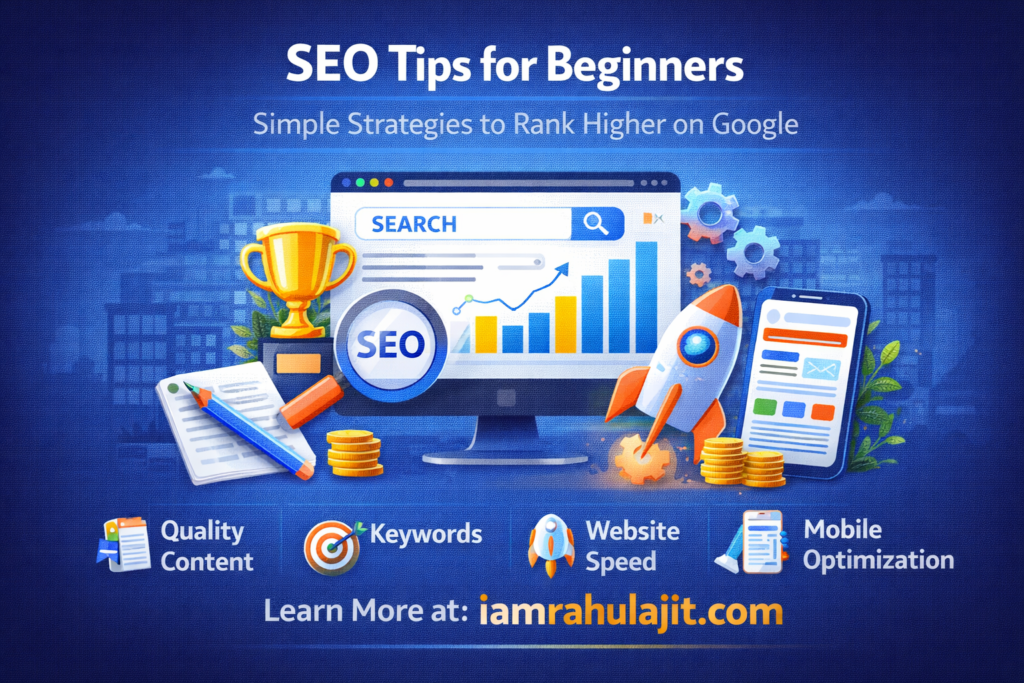
SEO Tips for Beginners
Digital Marketing

SEO Tips for Beginners

For anyone starting in digital marketing, learning SEO Tips for Beginners is one of the most valuable steps toward building a strong online presence. Search engine optimization helps websites rank higher in search results on Google, making it easier for potential customers to discover your content, products, or services. Many beginners assume SEO is highly technical, but the fundamentals are actually straightforward. By understanding the right strategies and applying them consistently, even a new website can gradually improve its visibility on search engines. These SEO Tips for Beginners will help you understand the essential practices that improve search rankings and drive sustainable organic traffic. Understand Search Intent One of the most important SEO Tips for Beginners is understanding search intent. Search intent refers to the reason behind a user’s search query. When someone types a keyword into a search engine, they are usually looking for a specific answer, product, or solution. There are generally four types of search intent: Creating content that matches the user’s intent increases the chances of ranking higher in search results. For example, someone searching “SEO tips for beginners” is looking for practical guidance and clear explanations. Providing helpful, well-structured content improves both user experience and rankings. Focus on High-Quality Content Content remains one of the most important ranking factors in SEO. One of the most valuable SEO Tips for Beginners is focusing on creating useful, original, and informative content. Search engines prioritize websites that provide genuine value to users. High-quality content should: When your content genuinely helps users solve problems, search engines are more likely to rank it higher. Use Keywords Naturally Keywords help search engines understand what your content is about. However, one of the most common mistakes beginners make is overusing keywords. A good rule when applying SEO Tips for Beginners is to place keywords naturally within headings, introductions, and throughout the content. Keywords should never make the content feel forced or unnatural. Instead of repeating the keyword excessively, focus on writing helpful and readable content. Search engines today understand context and related terms, so natural writing is always the best approach. Optimise Titles and Headings Another important strategy in SEO Tips for Beginners is optimising titles and headings. Your blog title and headings help both search engines and readers understand the structure of your content. A well-optimized title should: Headings (H2 and H3) also improve readability by breaking content into sections, making it easier for users to scan. Improve Website Speed Website speed plays a crucial role in both user experience and search rankings. A slow website can cause visitors to leave before the page fully loads. One of the key SEO Tips for Beginners is ensuring your website loads quickly across all devices. You can improve website speed by: Fast-loading websites not only improve SEO performance but also increase user engagement. Optimize for Mobile Devices Today, a majority of internet users browse websites on mobile devices. Because of this, mobile optimization is a critical ranking factor. One of the most practical SEO Tips for Beginners is ensuring that your website is mobile-friendly. A mobile-optimised website should: Search engines prioritise websites that deliver a good mobile user experience. Build Internal Links Internal linking is another effective strategy included in many SEO Tips for Beginners. Internal links connect different pages within your website. They help search engines understand your website structure and improve page authority distribution. For example, linking related blog posts allows users to explore more content while increasing time spent on your website. A well-structured internal linking strategy also helps search engines crawl your website more effectively. Be Consistent with Content Consistency plays a key role in long-term SEO success. Another essential part of SEO Tips for Beginners is regularly publishing new content. Search engines favor websites that stay active and continuously provide updated information. Creating a consistent content schedule helps build topical authority and gradually increases your website’s visibility. Even publishing one high-quality blog per week can significantly improve your SEO performance over time. SEO Tips for Beginners: Conclusion Learning and implementing SEO Tips for Beginners is one of the most effective ways to build long-term online visibility. Unlike paid advertising, SEO focuses on creating sustainable traffic that grows over time. Beginners should focus on mastering the fundamentals such as understanding search intent, creating high-quality content, optimising website speed, and using keywords naturally. These core practices form the foundation of successful search engine optimisation. From my experience working in digital marketing, many businesses underestimate the power of consistent SEO efforts. Small improvements made regularly can eventually lead to significant increases in organic traffic. If you are interested in learning more about SEO strategies, digital marketing insights, and website optimization techniques, you can explore additional resources on iamrahulajit.com where I regularly share practical marketing guidance and real-world insights. Over time, applying these SEO Tips for Beginners consistently can help build a strong online presence, improve search rankings, and attract the right audience to your website.

SEO vs PPC: Which is Better?
Digital Marketing

SEO vs PPC: Which is Better?

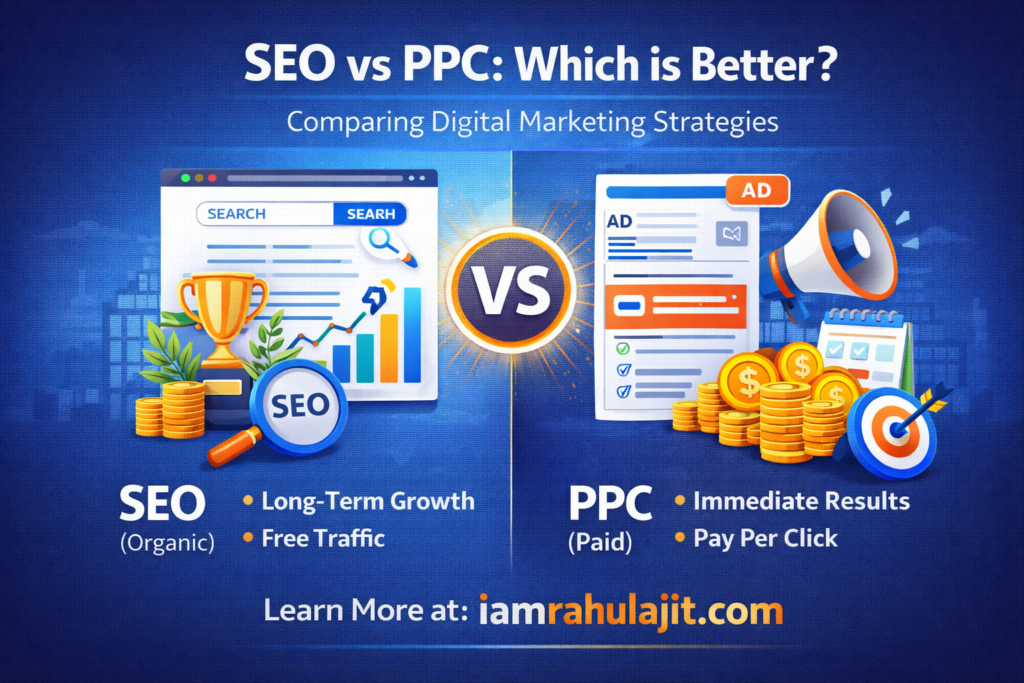
Businesses often struggle to decide between investing in search engine optimization or paid advertising. Understanding SEO vs PPC: Which is Better helps marketers choose the right approach based on their goals, budget, and timeline. Both SEO and PPC are powerful digital marketing strategies, but they operate in different ways. SEO focuses on improving organic search rankings, while PPC relies on paid advertising to generate immediate traffic. Each strategy offers unique advantages. What is SEO? Search engine optimisation (SEO) involves optimizing website content so it ranks higher in organic search results. The goal of SEO is to attract free, long-term traffic from search engines like Google. When discussing SEO vs PPC: Which is Better, SEO is often considered a long-term investment. SEO strategies typically include: Although SEO takes time, it can generate consistent traffic without paying for each click. What is PPC? Pay-per-click advertising allows businesses to display ads in search results and pay only when users click on them. In the comparison of SEO vs PPC: Which is Better, PPC is known for delivering faster results. Businesses can launch campaigns and begin receiving traffic almost immediately. PPC campaigns can also target specific demographics, locations, and keywords. However, traffic stops when advertising budgets are paused. Advantages of SEO SEO offers several long-term benefits: When discussing SEO vs PPC: Which is Better, many businesses prefer SEO because it builds lasting online visibility. Advantages of PPC PPC campaigns provide several advantages: Businesses launching new products or services often rely on PPC to generate quick exposure. Combining SEO and PPC Instead of choosing only one strategy, many successful businesses combine both. When evaluating SEO vs PPC: Which is Better, the answer often depends on business goals. SEO builds long-term traffic while PPC generates immediate leads. Together, they create a balanced marketing strategy. SEO vs PPC: Which is Better? : Conclusion Understanding SEO vs PPC: Which is Better requires evaluating your business objectives, marketing timeline, and available budget. Businesses seeking immediate results may benefit from PPC campaigns, while those focused on long-term growth should invest in SEO strategies. In many cases, the most effective approach combines both methods. SEO establishes long-term visibility, while PPC helps generate quick traffic and leads. Businesses that strategically integrate these two marketing channels often achieve stronger results than relying on a single strategy. For additional insights on SEO strategies, digital marketing techniques, and website optimization, you can explore resources available on iamrahulajit.com, where I regularly share practical marketing guidance. Ultimately, understanding SEO vs PPC: Which is Better helps businesses make informed marketing decisions and maximise their online growth potential.

Google Ads for Beginners
Digital Marketing

Google Ads for Beginners

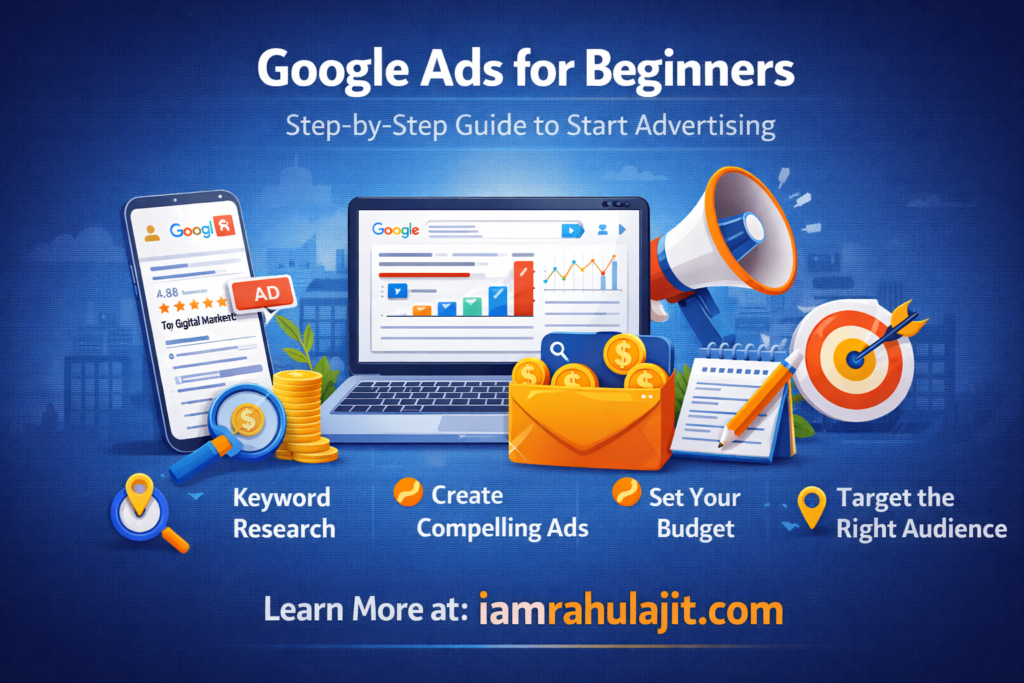
Online advertising has become one of the fastest ways for businesses to reach potential customers. For anyone new to digital marketing, understanding Google Ads for Beginners can open up powerful opportunities to drive targeted traffic and generate leads quickly. Unlike organic marketing strategies that may take months to show results, Google Ads allows businesses to appear in search results almost immediately. When users search for products or services on Google, advertisements can appear at the top of the search page, giving businesses instant visibility. For beginners, the platform may initially seem complex, but once you understand the fundamentals, Google Ads becomes a highly effective marketing tool. What is Google Ads? Google Ads is an online advertising platform where businesses pay to display ads in search results, websites, YouTube, and other Google partner platforms. The system works using a pay-per-click (PPC) model, which means advertisers only pay when someone clicks on their ad. Understanding how Google Ads for Beginners works starts with recognising how advertisers bid on keywords that users search for. For example, if someone searches for “digital marketing services,” businesses running ads for that keyword can appear at the top of the results. Keyword Research One of the most important steps in Google Ads for Beginners is selecting the right keywords. Keywords represent the search terms users type into Google. Effective keyword selection ensures your ads reach people who are actively searching for what you offer. Tools like Google Keyword Planner help identify: Choosing relevant keywords increases the chances of generating high-quality traffic. Creating Effective Ads Writing compelling ad copy is another critical part of Google Ads for Beginners. Your advertisement should clearly communicate: Strong ad copy often includes benefits, solutions, and trust signals that encourage users to click. For example: “Professional Digital Marketing Services – Get More Leads Today.” Clear messaging improves click-through rates and campaign performance. Setting the Right Budget One advantage of Google Ads for Beginners is that businesses can start with a flexible budget. Advertisers can control: This allows businesses to test campaigns without spending excessive amounts initially. Over time, campaign data can be analyzed and optimized to improve results. Targeting the Right Audience Google Ads allows businesses to target users based on several factors, including: Proper targeting ensures ads reach users who are most likely to convert into customers. For example, a business offering digital marketing services in Mumbai can target users specifically searching within that location. Track and Optimize Campaigns Successful advertising campaigns rely on continuous optimization. Advertisers should regularly monitor metrics such as: Tracking these metrics helps businesses understand which ads perform best and where improvements are needed. Google Ads for Beginners: Conclusion Learning Google Ads for Beginners provides businesses with a powerful tool for generating traffic and leads quickly. Unlike many marketing strategies that require long-term investment before showing results, Google Ads offers immediate visibility to potential customers searching for relevant services. However, successful campaigns require careful planning, keyword research, and ongoing optimization. Beginners should start with smaller budgets, test different ad variations, and gradually scale successful campaigns. From my experience working in digital marketing, businesses that combine paid advertising with strong SEO strategies often achieve the best results. While Google Ads can drive immediate traffic, SEO builds long-term organic visibility. For those interested in learning more about digital marketing strategies, SEO insights, and website optimization techniques, you can explore additional resources on iamrahulajit.com, where practical marketing insights are shared. In the long run, understanding Google Ads for Beginners helps businesses reach targeted audiences, generate leads, and grow their online presence more effectively.

Local SEO for Small Businesses
Digital Marketing

Local SEO for Small Businesses

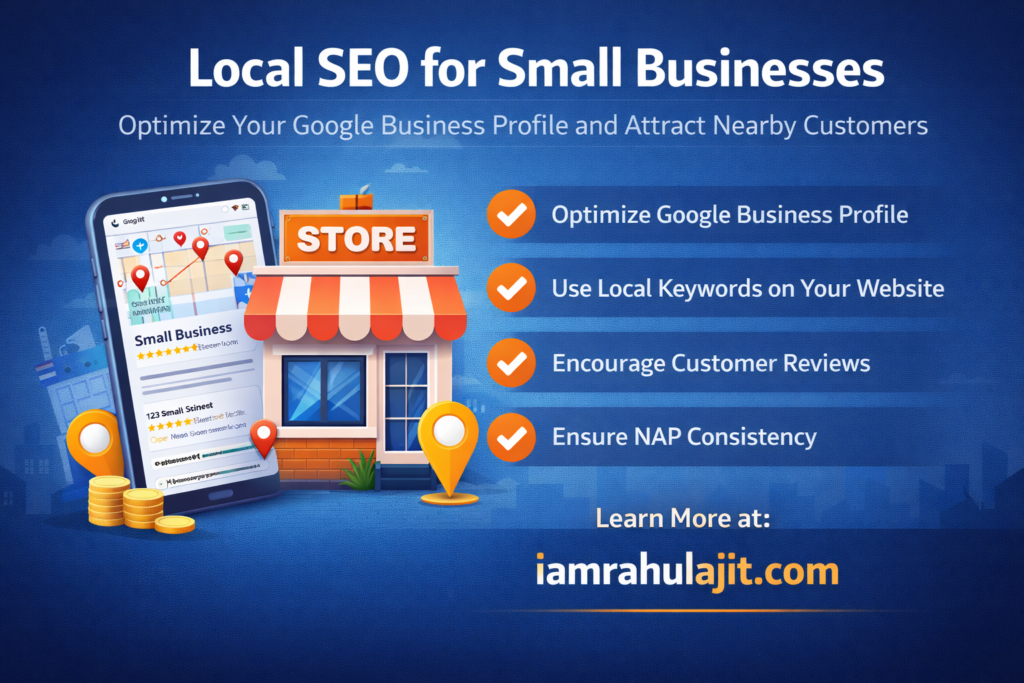
In today’s digital world, most customers search online on Google before visiting a store, restaurant, or service provider. This shift in consumer behaviour makes Local SEO for Small Businesses one of the most important strategies for attracting nearby customers and increasing visibility in search results. Local SEO focuses on optimising your online presence so your business appears when people search for services in a specific geographic location. For example, when someone searches for “digital marketing services near me” or “SEO expert in Mumbai,” Google prioritizes businesses that are properly optimized for local search. For small businesses, this creates a powerful opportunity. Instead of competing with large national brands, local SEO allows businesses to target customers in their immediate area who are actively looking for their services. Why Local SEO Matters for Small Businesses Many small businesses rely heavily on word-of-mouth referrals or traditional advertising. While these methods can still be effective, the majority of customers now begin their search online. When implemented correctly, Local SEO for Small Businesses helps businesses: Businesses that ignore local SEO often miss out on customers who are actively searching for their services. Optimize Your Google Business Profile One of the most important steps in Local SEO for Small Businesses is optimizing your Google Business Profile. Your Google Business listing helps search engines understand your business information and show it in local search results. Key elements to optimize include: Accurate and complete information increases the chances of appearing in the local map pack. Use Local Keywords on Your Website Another essential strategy for Local SEO for Small Businesses is using location-based keywords within your website content. For example: Including geographic keywords helps search engines connect your business with relevant local searches. These keywords should appear naturally in: However, it is important to avoid keyword stuffing and focus on creating valuable content for users. Encourage Customer Reviews Online reviews are one of the strongest trust signals for local businesses. Positive reviews not only influence customer decisions but also improve rankings in local search results. Encouraging satisfied customers to leave reviews can significantly strengthen your Local SEO for Small Businesses strategy. Tips for getting more reviews include: Responding to reviews — both positive and negative — also demonstrates professionalism and builds trust with potential customers. Ensure NAP Consistency NAP stands for Name, Address, and Phone Number. For effective Local SEO for Small Businesses, this information must remain consistent across all online platforms, including: Inconsistent information can confuse search engines and negatively impact rankings. Create Local Content Publishing locally relevant content is another powerful way to improve Local SEO for Small Businesses. Blog posts that focus on local topics can attract nearby customers and improve visibility in regional searches. Examples include: Local content helps search engines understand your geographic relevance. Build Local Backlinks Backlinks from other local websites strengthen your business authority. Examples include links from: High-quality backlinks signal to search engines that your business is trusted within your community. Improve Mobile Experience Most local searches happen on mobile devices. People searching for nearby services often want quick information such as phone numbers, directions, or opening hours. A mobile-friendly website improves user experience and supports your Local SEO for Small Businesses efforts. Make sure your website: Local SEO for Small Businesses: Conclusion For small businesses, online visibility can make the difference between steady growth and missed opportunities. Implementing a strong Local SEO for Small Businesses strategy allows businesses to reach customers who are actively searching for services in their area. Unlike traditional advertising, local SEO targets users who already have purchasing intent. When someone searches for a service nearby, they are often ready to take action quickly. Businesses that appear in these search results have a much higher chance of converting visitors into customers. Another important advantage of Local SEO for Small Businesses is long-term sustainability. While paid advertising can generate immediate traffic, local SEO builds lasting visibility that continues attracting customers over time. Consistency is also key. Businesses should regularly update their listings, encourage customer reviews, publish helpful content, and monitor their online presence. These small but consistent efforts strengthen credibility and improve rankings in local search results. From my experience working with digital marketing and website optimization, businesses that prioritize local SEO often outperform competitors who ignore it. Even simple improvements — such as optimizing a Google Business profile or adding location-based keywords — can significantly improve search visibility. For those interested in learning more about SEO strategies, digital marketing insights, and website optimisation techniques, you can explore additional resources available on iamrahulajit.com, where I share practical guidance based on real digital marketing experience. In the long run, businesses that invest time in Local SEO for Small Businesses not only improve their search rankings but also build stronger connections with customers in their local communities.

On Page SEO Checklist
Digital Marketing

On Page SEO Checklist

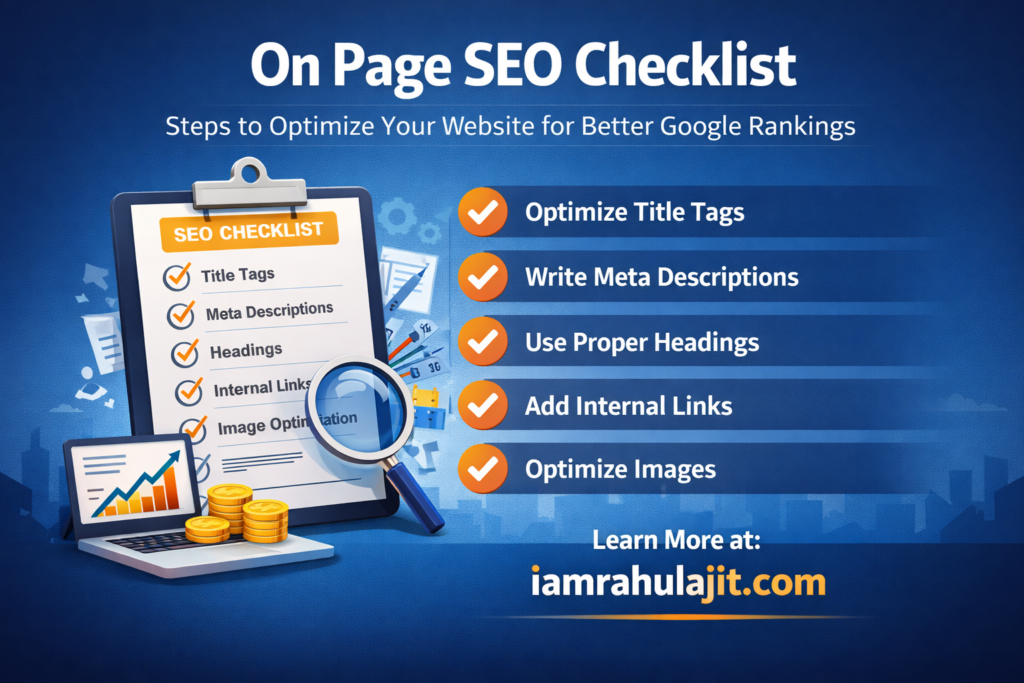
Search engine optimization plays a crucial role in helping websites rank higher on Google. While backlinks and domain authority matter, the foundation of any successful SEO strategy begins with On Page SEO Checklist practices. On page SEO refers to optimising elements within your website so search engines can understand your content and rank it appropriately. From title tags to internal links, each element contributes to how search engines evaluate your pages. Below is a practical checklist to help ensure your website pages are properly optimised. 1. Optimise Title Tags The title tag is one of the most important ranking factors. Your title should: A strong title improves both rankings and click-through rates. 2. Write Compelling Meta Descriptions Although meta descriptions do not directly affect rankings, they influence user behavior. A well-written description can increase the number of users clicking on your page in search results. Good meta descriptions should: 3. Use Proper Heading Structure Headings help organise your content and improve readability. A well-structured page typically includes: This structure helps search engines understand the hierarchy of your content. 4. Optimise Images Images improve user experience but must be optimized properly. Best practices include: Optimized images improve accessibility and contribute to better SEO. 5. Improve Page Speed Page speed is an important ranking factor. Slow websites can frustrate users and increase bounce rates. Ways to improve page speed include: Fast websites provide a better user experience and improve search performance. 6. Use Internal Linking Internal links connect related pages within your website. They help: For example, blog posts about SEO can link to related digital marketing resources. Some of these practical strategies are also discussed in detail on iamrahulajit.com, where I share insights based on real digital marketing experience. 7. Focus on Content Quality Even with perfect optimisation, content must provide value. Search engines prioritise pages that: High-quality content improves engagement and increases the likelihood of ranking higher. On Page SEO Checklist: Conclusion Implementing a structured On Page SEO Checklist is not just about ticking boxes, it is about building a strong foundation for long-term search visibility. Many website owners focus heavily on backlinks or paid advertising while ignoring the technical and content elements within their own pages. However, on-page optimisation is something you have full control over, and when done correctly, it can significantly improve rankings over time. Search engines are constantly evolving, but their core objective remains the same: to deliver the most relevant and helpful results to users. This means your website should prioritize clarity, structure, and value. Pages that are easy to navigate, clearly written, and logically organized tend to perform better because they enhance user experience. Following a consistent On Page SEO Checklist ensures that every important optimization element is covered properly. Another critical factor is consistency. Optimizing one page is not enough. Every important page on your website — including blog posts, service pages, and landing pages — should follow the same structured optimisation process. By applying the same On Page SEO Checklist across multiple pages, you gradually build stronger topical relevance and authority for your website. It is also important to understand that on-page SEO works best when combined with high-quality content. You can optimize titles, headings, and images perfectly, but if the content does not answer user questions effectively, rankings will be difficult to sustain. Search engines now evaluate user behavior signals such as time on page, bounce rate, and engagement. When users find your content useful, they stay longer, explore more pages, and interact with your website. Additionally, businesses should regularly audit their existing pages. SEO is not a one-time task. Updating outdated information, improving internal links, refining keyword placement, and enhancing readability can revive older pages and improve their performance. A well-maintained On Page SEO Checklist makes it easier to track these improvements and ensure every page continues to meet modern SEO standards. From my experience working on website optimisation and digital marketing strategies, businesses that follow a structured optimisation approach often see steady improvements in their search rankings. For more practical SEO insights and digital marketing strategies, you can explore resources available on iamrahulajit.com, where I share actionable guidance based on real-world experience. In conclusion, using a clear On Page SEO Checklist helps ensure your website remains optimised, user-friendly, and competitive in search engine results.

How to Generate Leads Online
Digital Marketing

How to Generate Leads Online

How to Generate Leads Online is one of the biggest challenges businesses face today. Whether you are running a startup, freelance service, or established company, understanding How to Generate Leads Online can determine whether your business grows or struggles to find customers. In today’s digital world, people research products and services online before making decisions. This means businesses must build a strong online presence that attracts potential customers and converts them into leads. As someone working in digital marketing and SEO, I’ve seen that businesses often focus only on increasing traffic. However, traffic alone doesn’t guarantee sales. What matters is attracting the right audience people who are already interested in your services. Below are some proven strategies on how to generate leads online. 1. Build a Search-Optimized Website Your website acts as your digital storefront. If it is not optimized properly, potential customers may never find you. A well-structured website should include: For example, if someone searches for digital marketing services, your website should clearly explain what you offer and how visitors can contact you. Businesses looking to improve their online visibility can explore resources available on iamrahulajit.com, where I share practical insights about SEO, website optimization, and digital marketing strategies. 2. Use Content Marketing Content marketing is one of the most powerful ways to attract potential leads. Publishing helpful content such as: positions your business as an authority in your niche. When users search for solutions online and discover helpful content on your website, they begin to trust your brand. Over time, this trust increases the chances of converting visitors into leads. 3. Offer Lead Magnets A lead magnet is something valuable offered in exchange for contact information. Examples include: This strategy works well because people are more likely to share their email if they receive something useful in return. 4. Use Social Media Platforms Social media platforms provide businesses with direct access to potential customers. Platforms like: allow businesses to share content, interact with users, and promote services. Consistently sharing useful insights builds credibility and keeps your brand visible to your audience. 5. Invest in Paid Advertising While organic strategies take time, paid advertising can generate leads much faster. Platforms such as Google Ads allow businesses to show ads to users who are actively searching for specific services. When done correctly, paid campaigns can deliver highly targeted leads. Conclusion Learning How to Generate Leads Online is not about relying on a single tactic. Successful businesses combine multiple strategies such as search engine optimization, content marketing, social media engagement, and paid advertising to attract the right audience. One of the most important things to remember is that lead generation is closely connected to trust and credibility. People rarely convert into customers the first time they visit a website. They usually research, compare options, read reviews, and look for businesses that demonstrate expertise in their field. This is where consistent online presence becomes important. When your website regularly publishes helpful content, answers common questions, and provides clear solutions, visitors begin to see your brand as a reliable source of information. Another important factor in How to Generate Leads Online is understanding search intent. Instead of targeting broad keywords, businesses should focus on solving real problems that their audience is searching for online. When your content aligns with user intent, search engines are more likely to rank it higher. Businesses should also remember that How to Generate Leads Online is not just about attracting visitors, but also about guiding them through the customer journey. Clear calls-to-action, contact forms, and easy navigation make it easier for potential clients to reach out. As digital marketing continues to evolve, companies that invest time in building a strong online foundation will always have an advantage over competitors who rely only on short-term strategies. For those interested in learning more about SEO, website optimization, and digital marketing strategies, or other topics like How to Generate Leads Online, Top 10 Proven Strategies Every Digital Marketing Expert Uses to Grow Brands, Top 5 Essential Digital Marketing Tools For Marketers you can explore additional resources and insights available on iamrahulajit.com. The goal is to provide practical information that helps businesses strengthen their online presence and attract meaningful leads. In the long run, businesses that focus on delivering value, building credibility, and maintaining consistent digital marketing efforts will find it much easier to generate high-quality leads online.

Top 5 Essential Digital Marketing Tools For Marketers (Updated 2026 List)
Digital Marketing

Top 5 Essential Digital Marketing Tools For Marketers (Updated 2026 List)

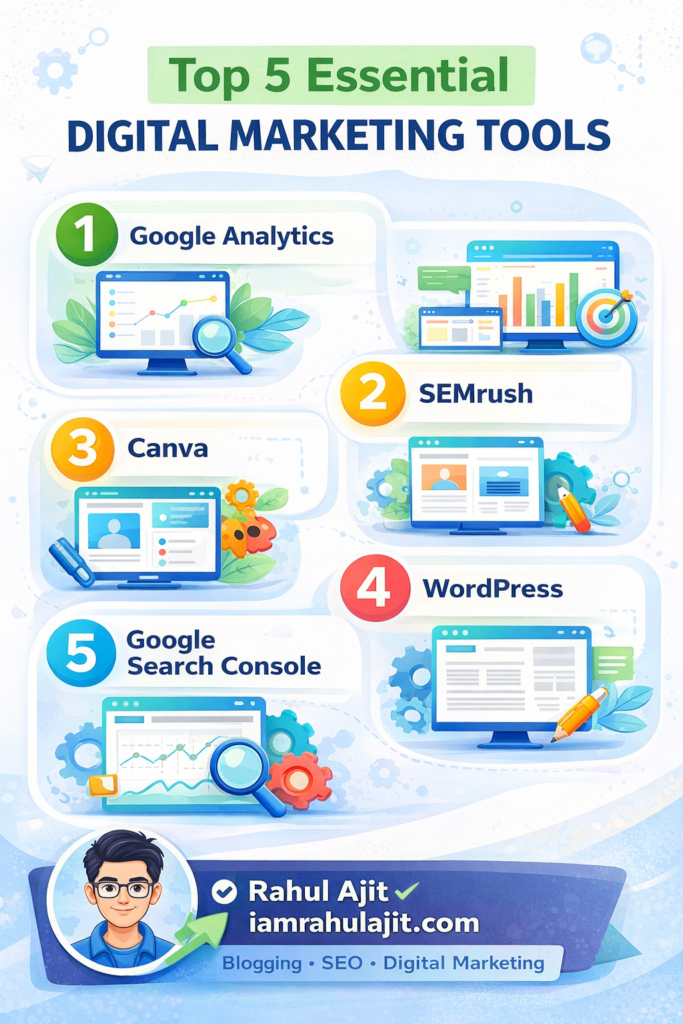
Digital marketing is no longer just about creativity—it’s about combining creativity with the right Digital Marketing Tools and data-driven strategies. Whether you are managing SEO, building a website, or creating content, digital marketing tools help marketers make smarter decisions and improve results. As someone actively learning and working with digital marketing strategies, I’ve spent time exploring several tools that simplify marketing workflows and improve online visibility. On my website iamrahulajit.com, I regularly share insights about SEO, website building, and digital marketing strategies based on my learning experience and practical experimentation. In this article, I’ll share the Top 5 Essential Digital Marketing Tools that every marketer should know and use. 1. Google Analytics Understanding how users interact with your website is crucial for improving digital marketing strategies. Google Analytics is one of the most widely used tools for tracking website traffic and user behavior. From my own experience analyzing website performance, this tool provides insights that help marketers understand which pages attract visitors and what content keeps them engaged. With Google Analytics you can: • Track website traffic and user activity• Understand visitor demographics• Monitor conversions and goals• Identify your best-performing content Many marketers, including those building personal marketing websites like iamrahulajit.com, rely on this tool to continuously improve website performance. 2. SEMrush SEO plays a critical role in digital marketing success. SEMrush is a powerful platform that helps marketers perform keyword research, competitor analysis, and website audits. While learning SEO strategies, tools like SEMrush have helped me better understand how keyword optimization and competitor insights can influence search rankings. Key features include: • Keyword research and tracking• Competitor analysis• Backlink monitoring• SEO audits and recommendations Understanding these insights helps marketers create better content strategies and improve organic search visibility. 3. Canva Visual content has become an essential part of digital marketing. Canva allows marketers to create professional graphics without advanced design skills. Personally, I frequently use Canva to design marketing graphics, blog visuals, and social media creatives while building content for my digital marketing website iamrahulajit.com. With Canva, marketers can easily create: • Social media posts• Blog thumbnails• Marketing posters• Infographics and presentations High-quality visuals help improve engagement and make marketing campaigns more effective. 4. WordPress A website is the foundation of a strong digital marketing strategy. WordPress is one of the most popular platforms used to build and manage websites. I personally use WordPress to manage my digital marketing website iamrahulajit.com, where I publish blog content, share marketing insights, and document my journey learning SEO and digital marketing. WordPress allows marketers to: • Build SEO-friendly websites• Publish optimized blog posts• Customize design and functionality• Integrate marketing and SEO plugins Its flexibility makes it one of the most trusted platforms for businesses and marketers worldwide. 5. Google Search Console Another important tool for digital marketers is Google Search Console, which helps monitor how a website performs in Google search results. This tool helps marketers: • Track keyword rankings• Monitor search impressions and clicks• Identify technical SEO issues• Improve website indexing When used alongside Google Analytics, it provides valuable insights into how users find and interact with your website. Why Digital Marketing Tools Matter Digital marketing tools help marketers make data-driven decisions instead of relying on guesswork. They simplify tasks like keyword research, content creation, website optimization, and analytics. Through my journey learning digital marketing, I’ve realized that understanding how to use these digital marketing tools effectively is just as important as learning marketing strategies themselves. I regularly share practical insights, marketing tips, and learning experiences on iamrahulajit.com for anyone interested in understanding how digital marketing works in real-world scenarios. The digital marketing industry continues to evolve, and marketers must adapt by using the right tools. The Top 5 Essential Digital Marketing Tools discussed in this article—Google Analytics, SEMrush, Canva, WordPress, and Google Search Console—help marketers analyze data, create engaging content, and improve website performance. If you’re starting your journey in digital marketing, mastering these tools will give you a strong foundation and help you build effective marketing strategies. You can explore more digital marketing insights, SEO tips, and marketing resources on iamrahulajit.com, where I share my learning journey and strategies for growing online.

Top 10 Proven Strategies Every Digital Marketing Expert Uses to Grow Brands
Uncategorized, Digital Marketing Expert

Top 10 Proven Strategies Every Digital Marketing Expert Uses to Grow Brands (Updated 2026 Strategies)

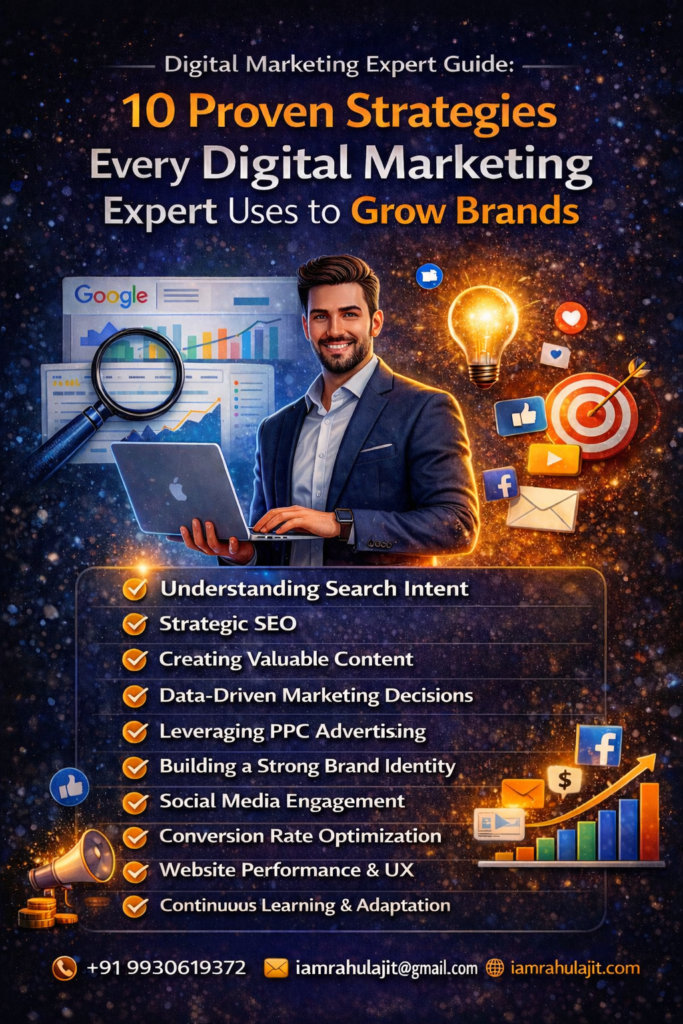
In today’s digital world, businesses can’t rely on guesswork when it comes to marketing. With increasing competition online, brands need strategies that are proven, data-driven, and adaptable. This is where a digital marketing expert makes a real difference. Over the past few years, I’ve seen how the right marketing approach can completely transform a business’s online presence. From improving search rankings to generating quality leads, the key lies in combining strategy, creativity, and analytics. A digital marketing expert doesn’t just run campaigns they understand how search engines, user behavior, and content work together to drive real results. Below are 10 proven strategies digital marketing experts use to help brands grow online. 1. Understanding Search Intent One of the most important factors in modern SEO is search intent. When people search online, they usually fall into four categories: Understanding how search engines interpret these searches is crucial. According to guidelines shared by Google Search Central, creating content that matches user intent helps websites rank better and provide a better user experience. 2. Strategic Search Engine Optimization (SE0) SEO remains one of the most powerful long-term growth strategies for businesses. A digital marketing expert focuses on several key SEO factors: When done properly, SEO allows businesses to generate consistent organic traffic without relying only on paid ads. For example, on my website iamrahulajit.com, I focus on practical SEO strategies that help businesses improve visibility and reach the right audience online. 3. Creating Valuable Content Content marketing plays a huge role in building authority online. Instead of creating content just to rank on search engines, a digital marketing expert focuses on providing real value to the audience. This includes: Many marketing studies from HubSpot show that businesses publishing consistent, valuable content generate significantly more leads than those that don’t. 4. Data-Driven Marketing Decisions Successful marketing strategies are always backed by data. Digital marketing experts analyze metrics such as: By studying these metrics, marketers can understand what works and what needs improvement. This approach helps businesses make smarter marketing decisions instead of relying on assumptions. 5. Leveraging Pay-Per-Click Advertising While SEO focuses on long-term growth, PPC advertising helps businesses generate quick results. Platforms like Google Ads allow brands to appear at the top of search results for relevant keywords. A digital marketing expert optimizes PPC campaigns by focusing on: When managed properly, PPC campaigns can deliver strong ROI. 6. Building a Strong Brand Identity In crowded digital markets, branding matters more than ever. A digital marketing expert helps businesses build a consistent brand presence through: A strong brand identity helps businesses stand out and build long-term customer loyalty. 7. Social Media Engagement Social media is no longer just a platform for sharing updates it’s a powerful marketing channel. Digital marketing experts use social platforms strategically to: Instead of posting randomly, they create content strategies designed to build community and trust. 8. Conversion Rate Optimization (CRO) Traffic alone doesn’t guarantee business growth. A digital marketing expert focuses on turning visitors into customers through conversion optimization. This involves improving: Even small improvements in conversion rates can significantly increase revenue. 9. Website Performance and User Experience Search engines prioritize websites that offer a good user experience. Digital marketing experts ensure websites are: A well-structured website improves both rankings and customer satisfaction. 10. Continuous Learning and Adaptation Digital marketing is constantly evolving. Search engine algorithms change, new platforms emerge, and user behavior shifts. A good digital marketing expert stays updated with industry trends, experiments with new strategies, and continuously improves campaigns based on results. This adaptability is what helps businesses stay competitive in the digital landscape. If you’re interested in learning more about practical digital marketing strategies and insights, you can explore more resources on iamrahulajit.com, where I share approaches that focus on real results rather than marketing hype. With the right strategy and consistent effort, any business can build a strong digital presence and grow successfully online.

Scroll to Top